WHAT TO KNOW
- Making a home safer rarely requires a major renovation — grab bars, better lighting and fewer trip hazards go a long way.
- Bathrooms, stairs and entryways are the most important places to focus accessibility upgrades.
- Plan for the next five to ten years, not just today, and consult an occupational therapist before major changes.
The good news? Making your home safer and more accessible doesn't always require a major renovation. From simple upgrades to larger improvements, here are ten ways to help make your home more comfortable and functional for years to come.
1. Install Grab Bars and Handrails
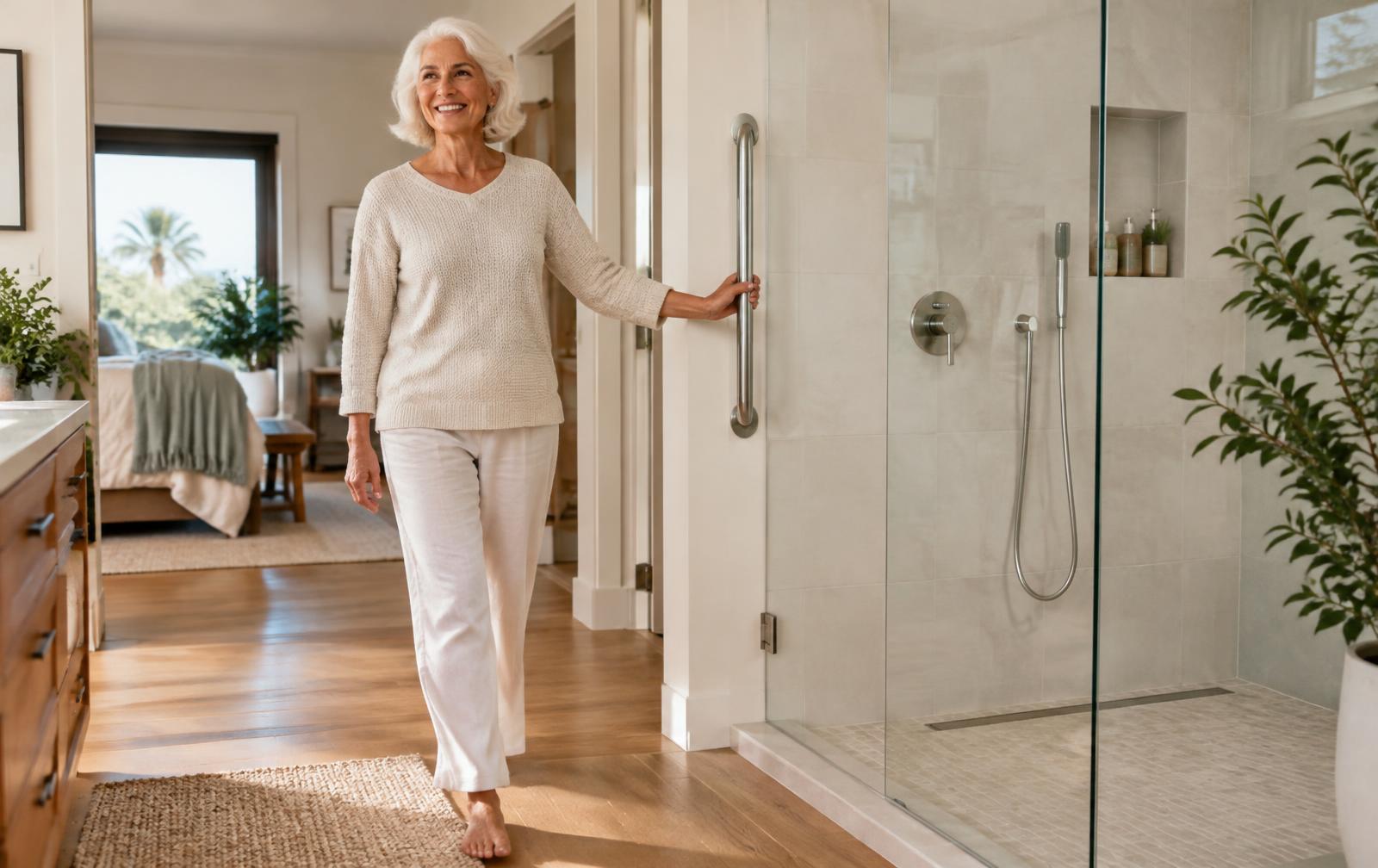
Grab bars in bathrooms and sturdy handrails along stairways can make a big difference in preventing falls. Focus on areas where extra support is needed, particularly near toilets, showers, and steps. Be sure grab bars are professionally installed and properly anchored for safety.
2. Improve Lighting Throughout the Home
Good lighting becomes increasingly important as we age. Brighten hallways, staircases, entryways, and other frequently used spaces. Motion-activated nightlights are an inexpensive way to make nighttime trips to the bathroom safer, while illuminated switches can make lights easier to locate.
3. Make Doorways More Accessible
Narrow doorways can make navigating a home difficult for anyone using a walker or wheelchair. In some cases, replacing standard door hinges with offset hinges can provide a little extra clearance without major construction. Wider doorways may be worth considering when planning larger renovations.
4. Create a Main-Floor Bedroom
Stairs can become more challenging over time. If your home has multiple levels, consider converting a downstairs room into a bedroom. Having a full bathroom on the same floor is equally important and can make daily routines much easier.
5. Upgrade the Bathroom for Safety
Bathrooms are one of the most important places to consider accessibility improvements. A walk-in or curbless shower, built-in shower seat, handheld showerhead, and slip-resistant flooring can improve safety and comfort. Depending on individual needs, a comfort-height toilet or toilet safety rails may also be helpful.
6. Take Advantage of Smart Home Technology
Technology can make everyday tasks easier without requiring complicated setups. Voice-controlled lighting, smart thermostats, video doorbells, and automatic lights can reduce the need to move around unnecessarily. Choose devices that are easy to operate and fit your comfort level with technology.
7. Rethink Flooring and Trip Hazards
Loose rugs, uneven surfaces, and raised thresholds can create unnecessary risks. Secure or remove area rugs, repair uneven flooring, and minimize transitions between rooms. When replacing flooring, look for slip-resistant surfaces that are easy to navigate with mobility aids.
8. Make the Kitchen Easier to Use
Simple kitchen changes can make cooking and meal preparation more comfortable. Move frequently used items to easily accessible shelves, install pull-out cabinet organizers, and consider lever-style faucets. For homeowners planning a larger remodel, accessible countertops and workspaces may be worthwhile investments.
9. Consider an Emergency Response System
Having a reliable way to call for help can provide peace of mind for seniors and their families. Wearable medical alert devices, fall-detection technology, and emergency calling features on certain smartwatches can offer an added layer of security, especially for those living alone.
10. Don't Forget Outdoor Accessibility
Safety doesn't stop at the front door. Keep walkways clear, repair uneven pavement, improve exterior lighting, and install handrails where needed. For homes with steps at the entrance, a properly designed ramp may make coming and going easier. Raised garden beds can also help homeowners continue enjoying gardening without excessive bending or kneeling.
Renee's Advice
Aging in place isn't necessarily about remodeling your entire home. Sometimes, a few thoughtful changes can make a meaningful difference in everyday comfort, safety, and independence.
It's also important to think beyond what works today. Will your home's layout continue to meet your needs five or ten years from now? Are the bedrooms and bathrooms easily accessible? Would future modifications be practical and affordable?
Every home and homeowner is different. Before making major improvements, consider consulting an occupational therapist or qualified accessibility professional to identify modifications that best fit your needs.
As a Realtor, I believe your home should support your lifestyle at every stage of life. Whether that means making improvements to the home you love or exploring a property that's better suited to your changing needs, understanding your options can help you make confident decisions about the future.
A NOTE FROM RENEE
Real answers. Personal guidance.
Buying or selling in Orange County, Los Angeles or San Diego? Let’s talk about your goals.
Let’s talk